Facial Redness Treatment in Boston, MA

What Is Causing Your Facial Redness?

Chronic flushing, visible surface capillaries, and background redness that no primer adequately covers are each rooted in vascular, inflammatory, or barrier-level changes that operate below what any topical formulation can reach. Effective facial redness treatment starts by identifying which of those mechanisms is driving the presentation. If you have been searching for facial redness treatment in Boston, MA, and have cycled through gentle cleansers and cooling serums without progress, the treatment pathway you need is clinical, not cosmetic.

Boston’s winters rank among the most skin-stressful in the Northeast, with average January lows near 22 degrees Fahrenheit and a geography that amplifies cold across the harbor-facing corridors of Back Bay and the South End. The shift between cold outdoor conditions and overheated indoor environments creates repeated cycles of vascular stress that drive flushing and the formation of couperose vessels. Spring pollen and peak summer UV ensure that patients prone to facial redness in Boston, MA, rarely encounter a neutral season.

At GFaceMD, located at 565 Tremont St in the South End, every facial redness treatment plan begins with a clinical assessment to determine the type of redness present and its underlying driver. No protocol is applied before that distinction is made.

Rosacea vs. Reactive Redness vs. Broken Capillaries

Facial redness is not a single diagnosis. Several structurally distinct conditions produce similar surface appearances, and the treatment that works for one may not work for another. Correct identification is the foundation of any effective facial redness treatment plan.

Erythematotelangiectatic rosacea:

Persistent central facial flushing and visible threadlike vessels worsened by heat, cold, alcohol, and exertion. This presentation responds most directly to vascular-targeted laser and RF modalities.

Papulopustular rosacea:

Inflammatory bumps and pustules over a chronic background redness, closely resembling adult acne. Misidentification leads to treatments that worsen rather than improve the condition.

Reactive and barrier-compromised skin:

Disproportionate redness, stinging, and flushing in response to temperature changes and skincare ingredients. Requires barrier restoration before resurfacing or vascular treatment is appropriate.

Telangiectasias and couperose vessels:

Permanently enlarged surface capillaries across the nose, cheeks, and chin that persist between triggers. Respond to direct laser targeting of the affected vessel.

Post-inflammatory erythema (PIE):

Flat pink or red marks remaining after healed acne, eczema, or skin irritation. Follows a different treatment trajectory from structural rosacea management.

Triggers That Worsen Facial Redness

Managing known triggers between sessions helps maintain clinical results and slow the pace of vascular change over time.
Cold-to-heat transitions: Stepping from sub-freezing street air into a heated interior repeatedly dilates and contracts surface vessels, accelerating couperose formation in susceptible patients across Boston’s colder months.
Solar radiation: Boston’s late-spring and summer UV index is higher than most patients expect. Cumulative UV exposure builds structural vascular damage in rosacea-prone skin over time.
Elevated body temperature: Exercise, hot showers, steam rooms, and saunas raise core temperature, triggering vasodilation and prolonging flushing well beyond the activity itself.
Vasodilating substances: Alcohol and spiced or hot foods raise skin temperature and cause rapid vessel dilation, producing flushing within minutes of consumption.
Reactive skincare ingredients: High-concentration exfoliating acids, denatured alcohol, and synthetic fragrance compromise barrier integrity and heighten reactivity between treatment sessions.

How GFaceMD Treats Facial Redness in Boston

Medical Laser Therapy with UltraClear® and Clear+Brilliant®

UltraClear ® is a cold-fiber laser with a reduced thermal footprint suited to sensitized, redness-prone skin. Clear+Brilliant operates at a gentler fractional level for patients in early treatment or maintenance. Parameters are set individually per session based on skin condition and Fitzpatrick classification.

Medical-Grade Anti-Redness Facial Protocols

GFaceMD’s clinical facial protocols for redness-prone skin use formulations selected for anti-inflammatory and barrier-reinforcing properties. They function as the primary intervention for barrier-driven reactive redness and run as a parallel support layer alongside laser for vascular presentations.

Targeted Medical-Grade Skincare Program

A structured home-care protocol built around ingredients shown to reduce vascular reactivity and support barrier function, developed at consultation and adjusted as treatment progresses to extend and protect in-office results.

What to Expect: Treatment and Results

Managing facial redness at GFaceMD is a clinical sequence. Patients with telangiectasias or rosacea require a series of laser appointments supported by medical facials and home-care protocols in parallel. This combination produces more durable results than laser alone. Visible improvement typically appears after the second or third session.

Recovery is minimal for most modalities. Redness and surface warmth after laser treatment resolve within 1 to 3 days. Treated capillaries fade over two to four weeks. Medical facials provide immediate calming and cumulative improvement over the course of the series.

How Many Sessions Are Needed?

Patients with telangiectasias or erythematotelangiectatic rosacea typically see improvement across two to four laser sessions, four to six weeks apart. Maintenance every three to six months is standard, given Boston’s year-round vascular triggers. Barrier-driven redness may improve substantially through medical facials and home care before any laser is introduced.

Safety and Sensitive Skin Protocols

Redness-prone skin does not respond well to aggressive intervention. Pushing too hard risks amplifying barrier disruption and triggering a reactive flare. GFaceMD starts conservatively, assesses the skin’s response between sessions, and advances only when the skin supports it.

All facial redness treatment at GFaceMD Boston is performed under physician supervision. Clinical standards reflect the training of Dr. Gretchen Frieling, MD, a Harvard-trained, triple board-certified Dermatopathologist and Harvard Medical School faculty member whose dermatopathology background applies directly to rosacea and vascular skin conditions.

Serving Boston and Surrounding Communities
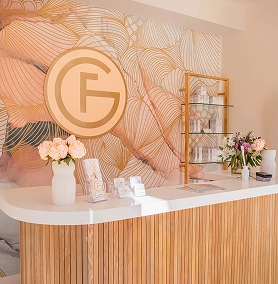
GFaceMD provides physician-supervised facial redness treatment in Boston, MA, serving patients from Back Bay, Seaport, Newton, Brookline, Cambridge, and Somerville. Located at 565 Tremont St in the South End, accessible via I-90 and Route 9. Also available at GFaceMD Wellesley, Andover, and Mashpee.
Boston Location img

Boston

Wellesley Location img

Wellesley

Andover Location img

Andover

Mashpee Location img

Mashpee

Frequently Asked Questions

What causes persistent facial redness in Boston, MA?

The most common drivers are rosacea, a compromised skin barrier, and established telangiectasias. Boston’s seasonal swings, low indoor humidity, and summer UV keep facial redness in Boston, MA from resolving without clinical intervention.

It depends on the redness type. Telangiectasias respond to laser. Reactive barrier redness needs a medical facial and skincare series first. Rosacea requires a combination of laser, barrier support, and home care. A GFaceMD consultation determines the correct sequence.

It can be. Rosacea causes persistent central flushing worsened by heat, cold, or alcohol, often with visible surface vessels. Barrier compromise, post-inflammatory erythema, and sun damage can each produce similar redness without sharing a common cause. Accurate identification before facial redness treatment begins determines whether treatment works.

Vascular redness and rosacea typically require two to four laser sessions, then maintenance every three to six months. Barrier-driven reactive redness may respond substantially to medical facials and skincare before laser is needed.

Back Bay, Brookline, Newton, Cambridge, and Somerville are the most common origins, with most patients traveling 10 to 20 minutes via I-90 or Route 9.

Book Your Consultation

Every case of facial redness has a driver, and every driver has a treatment pathway. A consultation at GFaceMD Boston is where your skin is evaluated with clinical precision, the specific cause of your redness is identified, and a plan is developed to address it at the source.
Where We Offer This Treatment: Boston · Wellesley · Andover · Mashpee
Please follow and like us:
Call Now Button