Facial Redness Treatment in Andover, MA

Facial Redness in Andover Has Unique Triggers

Andover’s environment creates particular challenges for redness-prone skin. Cold Merrimack Valley winters, high-UV summers, and an outdoor-active community culture produce near-constant vascular stress throughout the year. What begins as occasional flushing after a winter run along the Shawsheen River or a summer afternoon at Harold Parker State Forest can become persistent background redness that no longer resolves between activities. For many Andover patients, the shift from reactive flushing to constant redness happens gradually enough that they attribute it to aging or sensitive skin rather than recognizing it as a treatable condition. If you have been searching for facial redness treatment in Andover, MA, the first step is to identify the type of redness present and what is driving it.

At GFaceMD, located at 1 Main St, Suite 101 in Andover, rosacea, broken capillaries, post-inflammatory redness, and barrier-compromised reactive skin can all produce a similar surface appearance. Because the treatment that works for one person does not necessarily work for another, every facial redness treatment plan begins with a thorough clinical assessment before any modality is selected.

Understanding What Is Driving Your Redness

Erythematotelangiectatic rosacea:

The most common rosacea subtype among Andover patients, producing persistent central facial flushing and visible surface vessels driven by temperature swings, UV exposure, and outdoor exertion. Responds most directly to vascular-targeted RF and laser energy.

Couperose and telangiectasias:

Permanently dilated superficial capillaries from cumulative UV-related vascular damage. Do not resolve on their own and respond durably to targeted laser treatment.

Reactive skin with barrier dysfunction:

Andover’s cold winters and temperature cycling create chronic barrier stress, producing skin that flushes and reddens in response to products and exposures that intact skin tolerates. Barrier restoration is central to resolving this pattern.

Post-inflammatory erythema (PIE):

Residual flat pink or red marks after healed acne or skin trauma, which are frequently mistaken for active rosacea, with a distinct treatment pathway.

Papulopustular rosacea:

Inflammatory bumps and pustules on a background of persistent redness that mimics acne. Clinical distinction is required before treatment begins.

Andover Redness Triggers: The Specific List

Managing Andover’s specific triggers alongside clinical treatment produces significantly better long-term outcomes than treatment alone.
Moving between sub-freezing outdoor air and heated interiors through Andover’s long heating season repeatedly expands and contracts surface vessels, accelerating couperose formation over time.
Outdoor residents accumulate structural vascular damage in rosacea-prone skin across every season.
Running, cycling, and team sport participation raise core temperature and dilate facial vessels, producing exertion-induced flushing as a near-daily reality for Andover’s active population.
Alcohol is a fast-acting vasodilator in rosacea-prone patients, and its effect accumulates with regular consumption.
Denatured alcohol, high-concentration exfoliants, and synthetic fragrance disrupt barrier function and amplify reactivity between sessions.

How GFaceMD Treats Facial Redness in Andover

Medical Laser Therapy with Clear+Brilliant® and UltraClear®

UltraClear® targets visible telangiectasias and UV-driven erythema at precise tissue depths with a thermal footprint suited to sensitized, rosacea-prone skin. Clear+Brilliant® provides gentler fractional resurfacing for early-stage redness and maintenance between more intensive sessions. Both are calibrated to the Fitzpatrick classification and redness severity at each appointment.

Medical-Grade Anti-Redness Facials

Clinical protocols using anti-inflammatory and barrier-reinforcing formulations reduce acute redness, calm vascular reactivity, and progressively strengthen the skin barrier without triggering inflammation that worsens sensitized skin.

Medical-Grade Skincare Protocol

A structured home-care program built around clinically supported ingredients, including azelaic acid and niacinamide, where indicated. For Andover patients managing year-round UV, cold air, and athletic exertion, the skincare protocol is an active part of the clinical plan.

What to Expect: Treatment and Results

Most Andover patients with visible telangiectasias see meaningful capillary reduction across two to four sessions. Rosacea is a chronic condition, and for patients living with Andover’s year-round vascular triggers, maintenance every three to six months is part of a realistic long-term plan. Laser and Sylfirm X sessions produce temporary redness,s resolving within 24 to 72 hours. Patients who combine clinical treatment with consistent trigger management and daily SPF achieve results that neither approach alone can sustain.

Serving Andover and the Surrounding Merrimack Valley
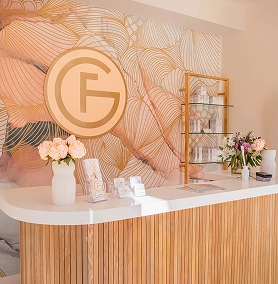
GFaceMD provides physician-supervised facial redness treatment in Andover, MA, serving patients from North Andover, Haverhill, Lawrence, Methuen, and Lowell at 1 Main St, Suite 101, via I-93 and Route 28.
Boston Location img

Boston

Wellesley Location img

Wellesley

Andover Location img

Andover

Mashpee Location img

Mashpee

Frequently Asked Questions

What causes facial redness in Andover, MA?

Year-round UV, Merrimack Valley cold, and Andover’s outdoor culture all contribute. Common causes include rosacea, broken capillaries, barrier-compromised reactive skin, and post-inflammatory erythema. A consultation at GFaceMD Andover identifies the specific cause before treatment begins.

Laser can permanently address visible vessels and produce significant long-term redness reduction. Because rosacea is chronic with ongoing triggers, periodic maintenance is typically recommended for Andover patients who spend significant time outdoors.

Yes. GFaceMD Andover customizes device selection and parameters for sensitized skin. Sylfirm X and UltraClear® are suited to a broad range of skin types when protocols are correctly adapted.

Most patients see meaningful improvement over two to four sessions spaced four to six weeks apart, with maintenance every three to six months for rosacea patients.

Where do patients come from for facial redness treatment in Andover?

Patients visit GFaceMD from North Andover, Haverhill, Lawrence, Methuen, and Lowell, typically 10 to 20 minutes via I-93 and Route 28.

Book Your Consultation

Persistent facial redness in Andover has specific causes, and effective treatment begins with accurate identification. A consultation at GFaceMD Andover is where your redness is assessed, the cause is established, and a plan is built around what is actually driving it.

Where We Offer This Treatment: Boston · Wellesley · Andover · Mashpee

Please follow and like us:
Call Now Button